

Navigate aging without children end of life planning with confidence! Discover essential legal documents, trusted fiduciaries, and support networks.
Aging without children requires deliberate planning to ensure your legal, medical, and financial decisions are in your control. Without a will or trusted decision-makers, courts assign strangers to manage your affairs, often leading to unnecessary costs and outcomes you may not favor.
Building strong support networks and regularly updating key documents help maintain your autonomy and legacy, providing peace of mind for both you and those you care about.
Many people assume that aging without children end of life planning is somehow simpler. No heirs, less complexity, right? Not quite. Without a spouse or adult children to step in, important decisions may fall to courts or distant relatives who may not fully understand your wishes. State default laws determine who manages your finances, who speaks for you medically, and who receives your assets.
Many people delay these conversations because they feel uncomfortable or overwhelming. That hesitation is normal. But planning ahead often creates more peace, not more fear. This guide covers every layer of planning that matters for solo agers: the legal documents, the right people to trust, the support networks that sustain you, and the legacy you want to leave behind.
At Aging Solo Today, we often talk about solo readiness. End-of-life planning is not about expecting the worst. It is about creating clarity, preserving independence, and making sure your voice remains central to your future care. When you plan ahead, you are not inviting fear—you are building confidence.
| Point | Details |
|---|---|
| Legal documents give you control | With proper documents, you choose who makes decisions on your behalf—not courts or distant relatives. |
| Choose fiduciaries deliberately | Select agents who are nearby, capable, and willing. Proximity matters more than emotional closeness. |
| Support networks require building | Intentional community connections replace what families typically provide automatically. |
| A will ensures your wishes are honored | Without one, state intestacy laws determine where your assets go—which may not reflect your actual priorities or relationships. |
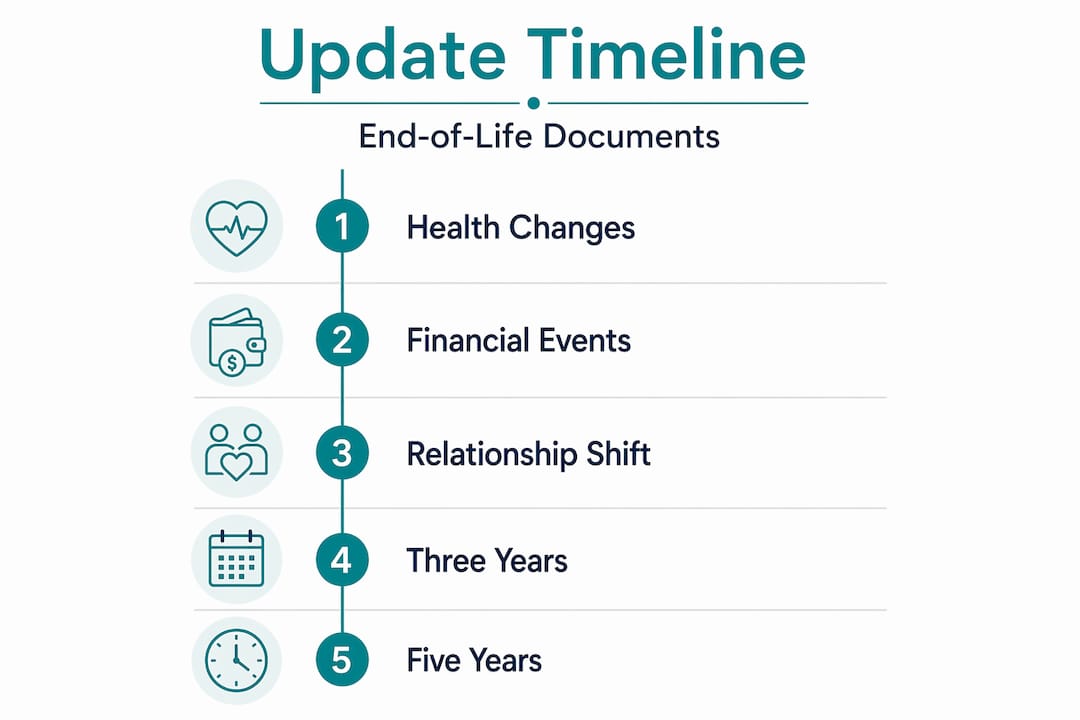
| Plans need regular updates | Review all documents every three to five years or after any major life change. |
Incapacity planning is one of the most important steps for adults without children. If you are hospitalized and cannot communicate, someone must make decisions on your behalf. With the right documents in place, you decide who that person is and what guidance they have. Without them, the process becomes more complicated and less predictable.
Here is what you need, and why each piece matters:
This authorizes a trusted person to manage bank accounts, pay bills, and handle property while you are alive but unable to act. It does not expire when you become incapacitated.
This names a person to make medical decisions when you cannot. This person speaks to doctors, consents to procedures, and advocates for your preferences. Choosing wisely here is one of the most meaningful decisions you will make.
This document spells out your specific wishes: resuscitation preferences, mechanical ventilation, feeding tubes, palliative care priorities. It guides your healthcare proxy and gives doctors clarity when time matters.
This is a medical order, not just a statement of preferences. It travels with you and gives emergency responders and hospital staff immediate direction.
This governs your assets after death. Without it, state intestacy laws take over entirely.
This allows assets to pass to beneficiaries without going through probate, saving both time and expense.
One important distinction: a living will and a healthcare proxy work as a system. A living will cannot anticipate every medical scenario. Your healthcare proxy provides the flexibility to interpret your values in real situations. Having only one of these creates gaps.
Pro Tip:
Keep a single folder or binder with every legal document clearly labeled and tell at least two trusted people where it lives. Digital copies stored in a secure location are worth the extra step.
Estate planning without children is more complex precisely because there are no default candidates. You cannot assume a sibling, niece, or old friend will be the right person. You have to think this through deliberately.
Your decision-makers fall into a few key roles: executor of your will, trustee of any trust, agent under your financial power of attorney, and healthcare proxy. One person can hold multiple roles, but spreading responsibility can also reduce burden and conflict.
Agents must be nearby to be effective. A friend who lives three states away may love you deeply but cannot realistically manage your care on short notice.
Name someone who is likely to be capable when you need them most. Many solo agers make the mistake of choosing someone their own age.
Your financial agent does not need to be an expert, but they need to be organized, honest, and willing to ask for help.
Ask the person directly before naming them. This conversation prevents unpleasant surprises later.
If your primary agent cannot serve, you need someone ready to step in without a court order.
What happens when no suitable friend or family member exists? That is where professional fiduciaries come in. A professional fiduciary is a licensed, trained individual or firm who serves as agent for people without available family. They are impartial, experienced, and regulated.
The cost is real, but so is the peace of mind. Using professional fiduciaries avoids the costly court conservatorship process that kicks in without any named agent.
Pro Tip:
Some areas have nonprofit organizations that provide professional fiduciary services on a sliding scale fee. Ask a local elder law attorney if this option exists near you.
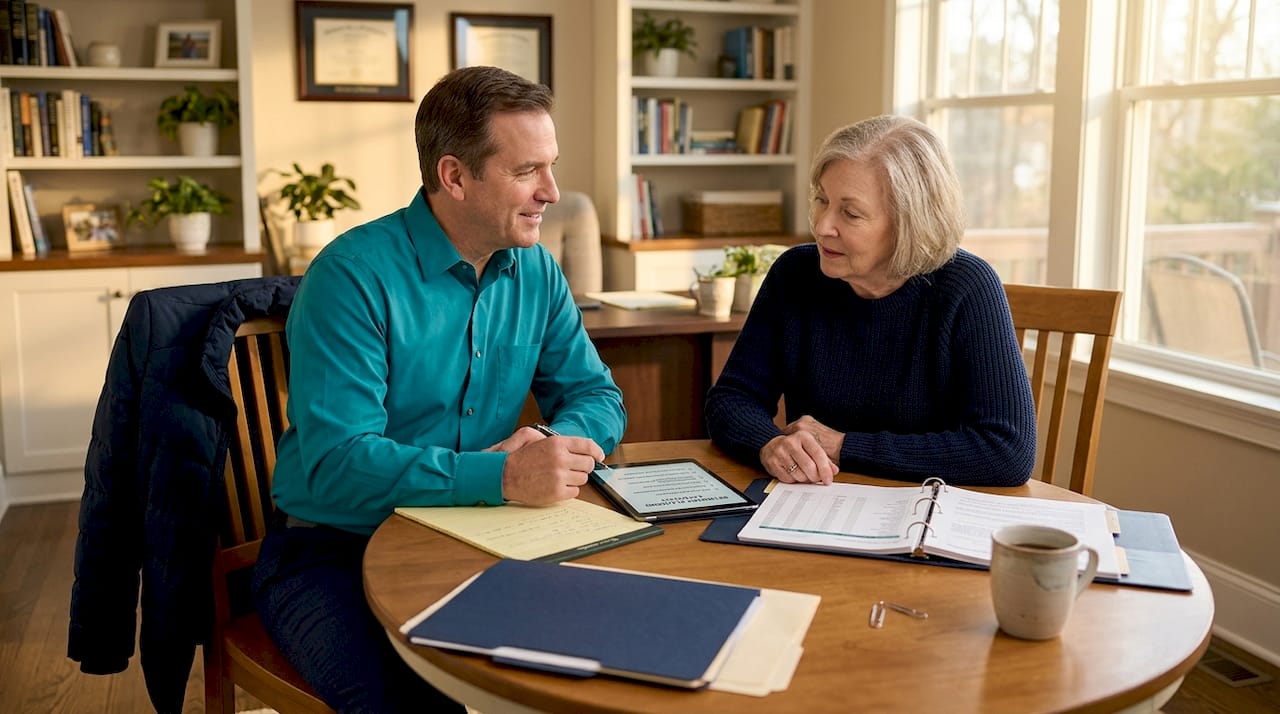
Legal documents protect your decisions on paper. Support networks protect you in practice. For solo agers, this is the piece that most people delay the longest. And it is the one that matters most when things get real.
For many solo agers, support does not come from traditional family structures. It comes from trusted friends, neighbors, faith communities, former coworkers, and intentionally built support circles. Your chosen family can be just as meaningful—and often even more intentional.
Think of your support circle in four layers. Build them one at a time.
Two to three people who know your full situation, have access to your emergency documents, and can be reached at any hour. These are your go-to people. Treat this relationship with care. Check in regularly. Make sure they know you value them.
People who can drive you to appointments, help with grocery runs, or check on you after a procedure. Neighbors, members of a faith community, or people you have known through clubs or classes often fall here.
A care management firm or health advocate can coordinate medical appointments, communicate with specialists, and manage care transitions. These are paid professionals, but the value they provide solo agers is hard to overstate.
Local senior centers, aging services organizations, and village networks exist specifically to fill the gaps for people without nearby family. Many offer friendly visitor programs, transportation, and wellness checks.
You can also explore support broker services that specialize in healthcare and caregiving coordination for adults without immediate family. Having a professional who knows your preferences and can navigate systems on your behalf is a real safety net, not a luxury.
Consider creating an advocacy card that clearly communicates your key contacts, medical information, and care preferences—so whoever needs to help can do so with confidence.
The goal is not to replace family. It is to build something that works just as well, maybe better, because it is intentional.
Without a will, your assets follow state intestacy rules. Those rules were not written with your life in mind. State default inheritance often passes assets to distant relatives, even ones you have not spoken to in decades, while ignoring the friends, neighbors, or causes that actually mattered to you.
Here is a clear comparison to help you see the stakes:
| Scenario | Without a will | With a will or trust |
|---|---|---|
| Assets go to | Distant relatives by default law | People and causes you choose |
| Probate process | Often longer and more expensive | Can be bypassed with a trust |
| Healthcare wishes | Not addressed | Honored via advance directives |
| Pet care | Unspecified, at risk | Handled through a pet trust |
| Memorial preferences | Unknown to decision-makers | Documented and communicated |
Beyond basic inheritance, think about what legacy means to you. Charitable giving is one of the most meaningful options for childless adults. You can leave a portion of your estate to a nonprofit, establish a named scholarship, or fund a cause you have supported throughout your life.
If you have pets, a pet trust names a caregiver and sets aside funds for their care. Without one, your beloved animal has no legal protection in your estate.
Without explicit planning, assets may drift to distant relatives who did not know you, did not care for you, and may not share your values. You have the power to change that. A revocable living trust, updated beneficiary designations, and a clear will create a plan that actually reflects your life.
Looking for more planning resources? Explore our guides on aging in place safely and building your community as part of your overall solo readiness strategy.
Review your documents every three to five years, or after any major health, financial, or relationship change. What worked at 60 may not fit at 75.
A thorough planning checklist covers legal authority, financial visibility, and personal legacy. Here is what you need to have in place:
Draft or update your last will and testament and consider a revocable living trust to avoid probate
Create a durable power of attorney for finances and a separate healthcare proxy
Complete a living will and, if appropriate, a POLST order with your physician
Review and update all beneficiary designations on accounts, retirement funds, and insurance policies
Name a primary and successor fiduciary for each role: executor, trustee, healthcare agent, financial agent
Identify and document your inner support circle with contact information and instructions
Write down your funeral and memorial preferences and share them with at least two people
Create a document inventory listing your accounts, assets, and where all key documents are stored
Build a life care plan that captures your housing preferences, care priorities, and daily support needs
Early planning leads to smoother transitions and preserves your autonomy far longer than waiting for a crisis.
One of the realities of aging without children is realizing that support systems rarely appear automatically. They are usually built intentionally over time. That can feel intimidating at first, but it can also lead to deeper friendships, stronger community ties, and clearer decisions about the kind of support you truly want.
I have worked closely with many adults who delayed starting this process. What I have seen, again and again, is that the delay is rarely about laziness—it is about discomfort. These conversations can feel heavy. But here is what I also know: the moment someone completes even the most basic documents, something shifts. The future feels more manageable. That is not a small thing.
Planning for aging alone is not about expecting the worst. It is about creating clarity, preserving independence, and making sure your voice remains central to your future care. It is also an act of love toward the people in your life. When you plan ahead, you spare them from impossible decisions made without guidance.
Start with one document. Then the next. You do not need to do everything at once. You just need to start. The solo aging journey is far more empowering when you have a real plan behind you.
— Mike
Planning for aging alone does not have to feel like starting from scratch. Agingsolo has built a set of practical, people-centered resources specifically for adults aging without children.
Your trusted resource for aging with confidence, independence, and community.
Start with the life care planning guide, which walks you through the decisions, documents, and support structures that matter most for solo agers. If you are just finding your footing, Solo Aging 101 gives you a clear, calm starting point.
For deeper support, explore tools on building your support circle and staying safe and independent at home. Everything at Agingsolo is designed for adults in exactly your situation. Practical. Honest. Worth your time.