
Discover your ideal adult living alone wellness routine list. This guide offers practical tips for thriving solo after 50—stay healthy and engaged!
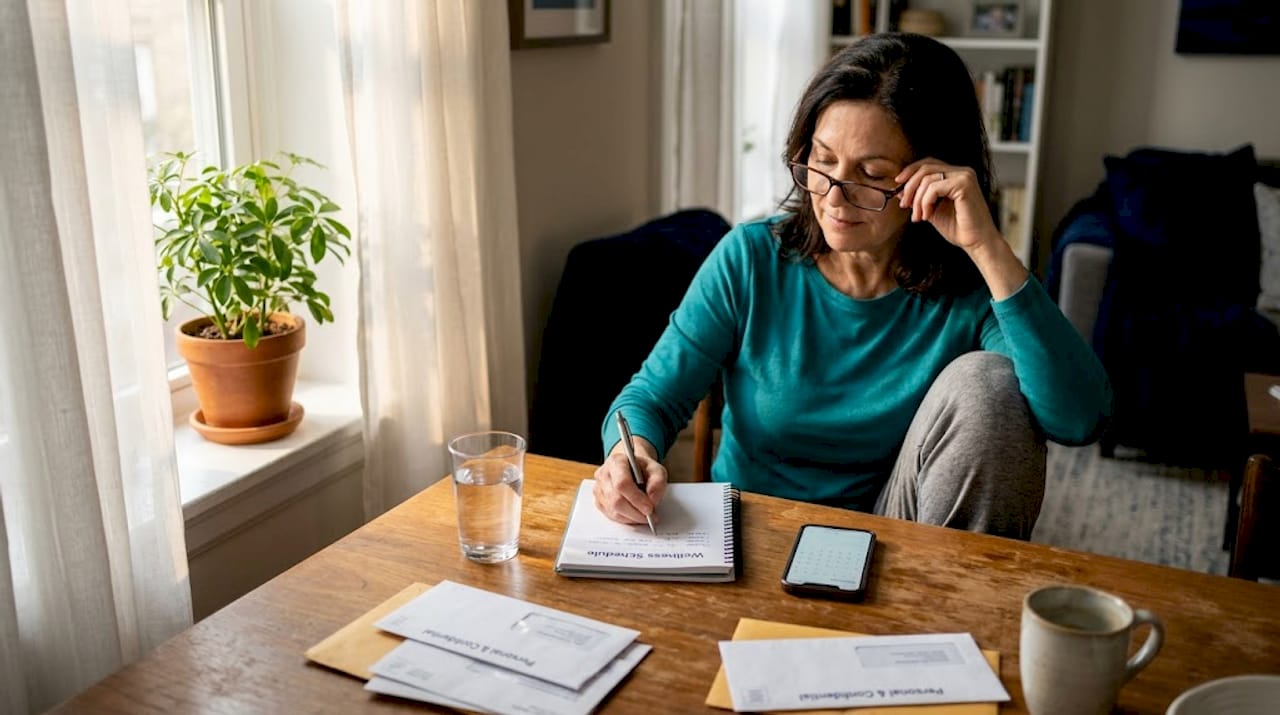
Combining movement, strength, balance, and connection supports independence for solo adults.
Starting with just a few minutes of activity daily helps build consistent routines.
Connecting with others—even in small ways—is vital for healthy aging when living solo.
Listen to your body and adjust activities for health flare-ups or life changes.
Wellness routines that feel rewarding are the ones you'll maintain over time. The most effective routine is not the most ambitious one—it is the one you return to, again and again.
Living alone after 50 means there is no automatic system quietly holding your routine together. No partner reminding you to slow down, stretch, eat well, or get outside for a walk, especially if you are navigating the realities of aging alone without nearby family support. The freedom can feel empowering. It can also feel surprisingly easy to drift.
Many solo adults want a dependable wellness routine but feel stuck deciding what is actually essential versus what is just noise. This guide cuts through the overwhelm. You will find research-backed routines, a realistic sample week, and simple ways to adapt everything to your own pace and circumstances, so you can stay strong, connected, and independent on your own terms.
"The goal is not perfection. It is consistency."
Aging solo successfully is rarely about doing everything perfectly. It is about building enough structure, support, and self-awareness that your life keeps working well even when motivation dips or circumstances change.
Before you build a routine, it helps to know what a solid one actually includes. Not every wellness trend deserves your time. What matters is a foundation that covers your physical, mental, and social health in a way that fits your real life.
A practical starter routine for adults 50 and older should center on three physical activity components: aerobic activity, muscle strengthening, and balance work. These are not optional extras. They are the minimum that research consistently points to for maintaining independence as you age. Think of them as the three legs of a stool. Remove one and the whole thing wobbles.
But physical activity is only part of the picture. Social isolation lowers the odds of healthy aging, which means connection is not a luxury. It is a health behavior. If you are building a solo routine, social contact needs to be in the plan just as intentionally as your morning walk.
Schedule your activities the same way you would a doctor's appointment. Pick a time that already works for your day and protect it. If mornings are your best energy window, that is your movement window. Work with yourself, not against yourself.
Knowing the pillars is one thing. Seeing what an actual week looks like is another. Here is a simple, realistic structure you can use as a starting point and adjust as needed.

A healthy long-term target for aerobic activity is about 150 minutes per week of moderate-intensity movement, which breaks down to roughly 22 to 30 minutes a day. That is very manageable, especially when you build up gradually. If you are just getting started, even 5 to 10 minutes a day counts and adds up faster than you think.
A workable weekly structure for a solo routine includes daily movement for aerobic minutes, strength training on at least two days, and balance practice frequently throughout the week. Here is how that can look in practice:
20-minute walk plus 5-minute balance practice
Standing on one foot while brushing teeth
15-minute chair strength routine
Using resistance bands or canned goods
25-minute walk or gentle bike ride
Plus a phone call to a friend
Strength routine plus 10 minutes stretching
Full body stretch routine
20-minute walk with balance exercises
Plus a group activity or online class
Longer outing
Nature walk or community event
Gentle movement and rest
Slow walk, yoga video, or family call
| Day | Activity Type | Duration | Social Element |
|---|---|---|---|
| Monday | Aerobic + balance | 25 min | Neighbor wave or text |
| Tuesday | Strength | 15 min | Check-in call |
| Wednesday | Aerobic | 25 min | Walk with a friend |
| Thursday | Strength + stretch | 25 min | Online group |
| Friday | Aerobic + balance | 30 min | Class or club |
| Saturday | Aerobic (longer) | 40 min | Community outing |
| Sunday | Gentle movement | 20 min | Family call |
Pair activities to save time and boost connection. Call a friend while you walk, or listen to a favorite podcast during your strength routine. You are hitting two wellness goals at once without adding extra time to your day.
Each pillar of your routine deserves a closer look. Here is what actually counts for each one, with solo-friendly options that do not require a gym membership or a workout partner.
Anything that raises your heart rate a little. Walking is the most accessible option for most people. So is dancing in your kitchen, cycling on a stationary bike, or swimming.
Key: Choose something you actually enjoy. If you dread it, you will skip it. If it feels good, you will come back to it.
Does not have to mean heavy weights. Household tasks like carrying groceries, gardening, or climbing stairs all count as functional strength.
Key: Chair exercises and resistance bands are excellent starting points. Even two 15-minute sessions a week make a meaningful difference.
Often overlooked but critically important for solo adults. A fall at home when no one is around is a serious risk.
Key: Stand on one foot while holding a counter, slow marching in place, or tai chi videos a few times a week.
Where many solo adults feel the gap most. Connection does not have to be large, loud, or constant to matter. Small moments of consistency often carry more emotional weight than people realize.
Key: Group video calls, neighborhood walks, phone check-ins, book clubs, faith communities all provide meaningful contact.
Physical activity is directly linked to improved sleep and mental health in older adults. That means your movement routine is doing double duty—it is not just keeping your body strong. It is also helping you sleep better and feel steadier emotionally.
| Approach | Best For | Pros | Cons |
|---|---|---|---|
| Solo at-home | Limited mobility | Flexible, private, low cost | Less social contact |
| Group class | Social learners | Built-in connection | Requires scheduling |
| Tech-assisted | Digital comfort | Guided, on-demand | Screen fatigue |
| Paper log | Offline preference | Simple, no tech | Less interactive |
Set a simple reminder on your phone or a sticky note on your mirror. Accountability does not have to come from another person. A well-placed visual cue can be just as effective.
Life does not stay the same. Your routine should not have to either. If you are managing a chronic condition, recovering from an illness, or just getting back to movement after a long break, the approach needs to shift.
The most important first step is to talk to your doctor or a physical therapist before starting a new routine if you have health concerns. Guidelines still support movement for people with health issues, but the right intensity and type of activity matters. You do not have to do nothing. You just need to do the right thing for your current situation.
If fatigue or deconditioning is a factor, the goal is simply to do something every day. Even three minutes of gentle movement is better than zero. Research and practical guidance both support building from small amounts, starting slowly and adding minutes over time.
3-minute morning stretch
Before getting out of bed
One lap around home
After each meal
Chair arm raises
While watching TV
Stand at counter
5 minutes instead of sitting
Slow deep breathing
2 minutes before sleep
"Small steps, not perfection, protect your health trajectory."
Expect ebb and flow. Some weeks will go smoothly. Others will not. That is not failure. That is life.
Living alone means there are seasons where nobody notices when your energy changes except you. That is why small habits matter so much.
The goal is to keep the thread, even when it gets thin. If you notice that low mood or withdrawal is making it harder to stay consistent, check in with yourself to understand what might be going on beneath the surface.
Here is a side-by-side look at three common approaches to solo wellness routines. Use this to find the level that fits where you are right now.
| Routine Level | Weekly Time | Intensity | Social Component | Adaptability |
|---|---|---|---|---|
| Minimal | 60-90 min | Light | Optional | |
| Standard | 150 min | Moderate | Included | |
| Enhanced | 200-250 min | Moderate to vigorous | Built in |
Ideal if you are just starting out or managing health challenges. It covers the basics without overwhelming you.
Meets the recommended guidelines and includes intentional social connection.
Suits those who are already active and want to maintain or build on their current fitness level.
Most solo adults do best starting at Minimal or Standard and adjusting from there. You can always add more. It is much harder to recover from burning out or getting injured by doing too much too soon.
Here is an honest take that most wellness guides skip over. Fixed, rigid schedules are not the answer for most people aging alone. Life interrupts. Energy shifts. Seasons change. A routine that demands perfection will eventually collapse, and when it does, the temptation is to give up entirely.
What actually works is a flexible structure with a few non-negotiables. Maybe your non-negotiable is a daily walk, no matter how short. Or a weekly call with someone you care about. Those anchors help stabilize your days when everything else feels inconsistent.
The highest-value habits are the ones you look forward to, not the ones you dread. If strength training feels like punishment, find a different way to build strength. If group classes feel exhausting, walk solo and call a friend afterward. There is no single right answer. There is only what works for you, consistently, over time.
The most effective solo wellness routine is not the most ambitious one. It is the one you return to, again and again, even after a hard week.
— Aging Solo Team
Understanding loneliness in aging is also part of this picture. Sometimes what looks like a motivation problem is actually a connection problem. When the quiet feels heavier than expected, the routine is harder to start. Addressing that honestly, rather than pushing through with sheer willpower, is what makes wellness sustainable for the long haul.
Wellness while aging solo is not about chasing optimization. It is about protecting your quality of life, your confidence, and your ability to continue living life on your own terms.
Building a wellness routine when you live alone takes intention, and you do not have to figure it all out from scratch.

At Aging Solo, we have put together practical, people-centered resources designed specifically for adults navigating life without a built-in support system.
You deserve a version of aging that feels supported, intentional, and sustainable — even if you are building much of that structure yourself.
Take the first step today—your future self will thank you.
Practical strategies for maintaining your independence through movement.
A clear starting point for planning ahead with confidence.
Build real social ties with this structured approach.
Wills, POA, and essential planning documents.